
Quick answer
Choose by what must still work tomorrow
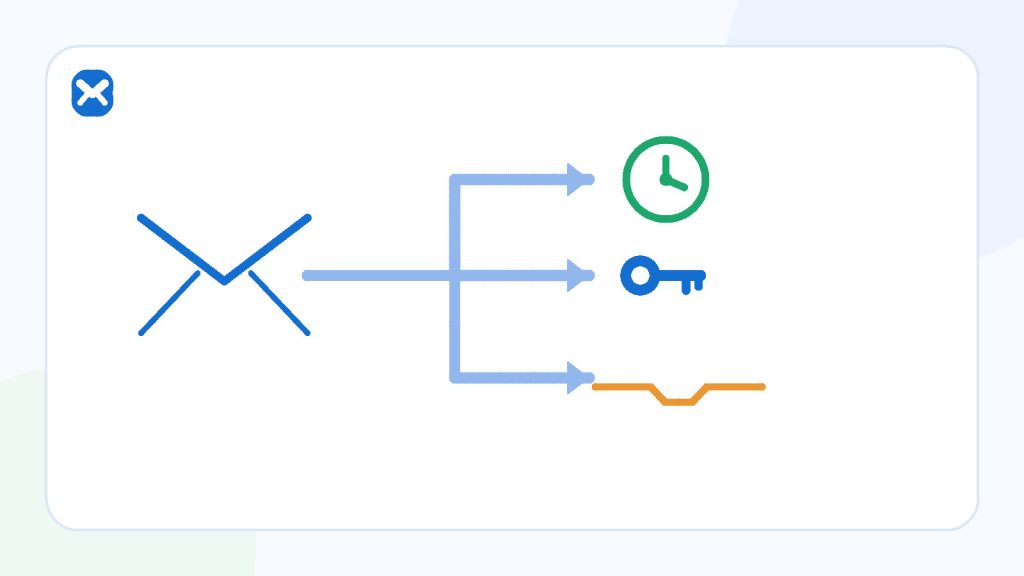
Use a temporary inbox when the interaction truly ends after one expected low-risk message. Use a forwarding alias when the relationship may continue but you want a separate address. Use a separate durable inbox when you need replies, records, recovery, or an identity you control long term.
- Temporary = short task
- Alias = continuing route
- Separate inbox = durable identity
The deciding question
Would losing this address matter?
- No: temporary email may fit.
- Maybe: use an alias you can keep.
- Yes: use a durable mailbox.
Do not optimise only for
The fastest address to create
- Recovery can matter months later.
- Receipts and support need continuity.
- Replies require a sending identity.
Process
Use a four-question decision path
The address type follows the relationship, not the label on the signup form.
Will the sender contact you again?
If newsletters, updates, support, or account notices will continue, choose a route you can keep or disable deliberately.
Will you need to reply?
A receive-only temporary inbox cannot send or reply. Choose an alias or mailbox whose sending behavior you understand.
Could the message become a record?
Receipts, warranties, travel details, work decisions, and health or identity records need durable access and reliable search.
Could the address recover an account?
If the address participates in login, reset, or ownership proof, use a mailbox you control long term and protect appropriately.
Decision guide
Compare the three tools by consequence
| Need | Temporary inbox | Forwarding alias | Separate inbox |
|---|---|---|---|
| One expected low-risk message | Good fit when the destination permits it. | Works, but may be more setup than needed. | Works, but adds another durable identity. |
| Ongoing newsletters | Poor fit; access may disappear. | Good fit if you can disable the alias later. | Good fit if you want a dedicated mailbox. |
| Replies or support thread | Not supported by receive-only Temp Mail 24. | Depends on the alias provider’s reply feature. | Good fit. |
| Purchases and receipts | Avoid. | Possible only if the alias is durable and recoverable. | Preferred. |
| Account recovery | Avoid. | Use only if the alias is durable and under your control. | Preferred. |
| Sensitive or work data | Avoid. | Depends on policy and provider. | Use an approved durable account. |
Practical details
How the trade-offs change in real life
Temporary email minimises commitment
A temporary inbox is useful when you expect one message and do not need a relationship with the sender. It can keep a low-risk interaction away from an important address, but it does not create durable ownership or a recovery channel.
The exact lifetime and retention are not guaranteed. Finish the task while the inbox is available and never treat it as storage.
Aliases preserve continuity without exposing one address everywhere
An alias can be unique to a sender and forward into a mailbox you already use. If unwanted mail begins, the alias can sometimes be disabled without changing the main address.
Plus addressing is a simpler form of subaddressing, not the same privacy boundary as a separately generated alias. The base address may remain obvious, and some forms reject plus signs.
A separate inbox isolates both address and workflow
A second mailbox creates its own login, sending identity, folders, security settings, and recovery obligations. It is more work, but it is appropriate when the messages form a durable record or require replies.
For work, healthcare, finance, travel, identity, or legal communication, follow the organisation’s approved system rather than choosing solely for convenience.
Checklist
Choose before you submit the form
- The interaction ends after one expected message.
- No receipt, warranty, booking, or record must be kept.
- No reply or support thread will be needed.
- The address will not be used for recovery or MFA.
- The destination allows the address type.
- You understand where future messages will go.
If any answer is uncertain, choose an alias or permanent inbox that you can recover.
Related reading
Continue with the right next step
Read the broader temporary email decision guide, then compare subaddressing in email aliases versus plus addressing. For a strict exclusion list, use when not to use temporary email.
Sources
Authoritative references
These references support the technical and privacy details above. Product-specific limits are described separately in our own guides.
FAQ
Frequently asked questions
Is a forwarding alias a separate inbox?
Usually no. It is an address that routes messages to another mailbox, although provider features vary.
Can Temp Mail 24 reply to a sender?
No. It is receive-only, so choose another tool when a conversation or support thread is required.
Is plus addressing the same as a private alias?
No. A plus tag is part of the same base address and can often be removed to reveal that base.
Which option is best for purchases?
A durable mailbox, or a durable alias backed by one, is safer because receipts, support, warranties, and recovery may matter later.